High-speed particles called “cosmic rays” pour down on us from space, thousands of times every second.
Some of them become muons — highly penetrating particles now making headlines for their use in “seeing inside” ancient pyramids and active volcanoes.
We wanted to make that kind of cutting-edge research something anyone could experience at school or in their community.
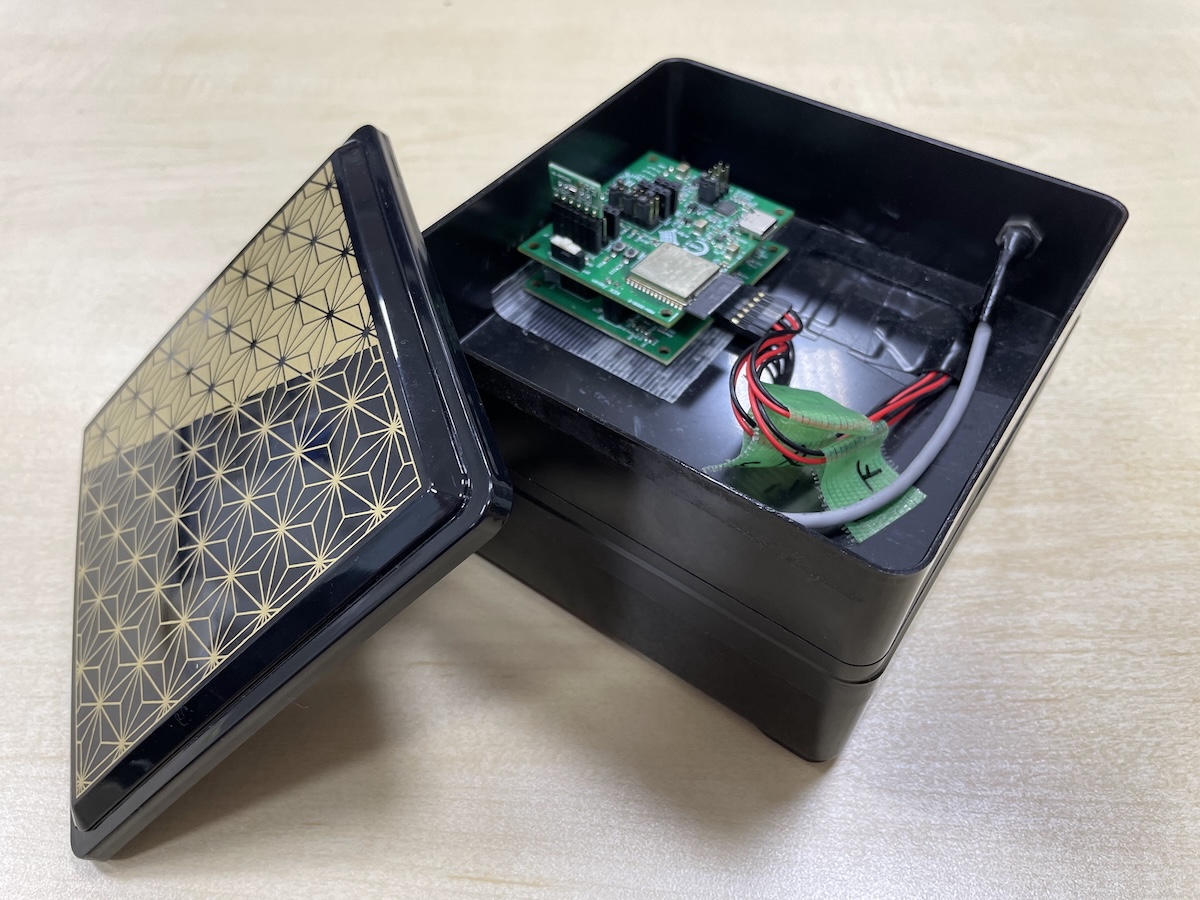
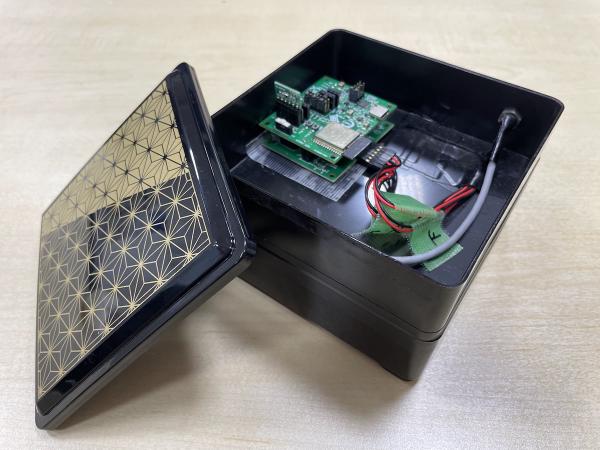
That’s what led to OSECHI, a compact cosmic-ray detector.
This project brings together members from universities and research institutes across the country. It’s still very much a work in progress, but we’re having fun building it — come join us if you’re interested!
On Sunday, September 6, 2026, we will hold the Japan Society for the Promotion of Science’s “Hirameki Tokimeki Science — Welcome to the University Lab! KAKENHI” program “Watch the Sun with Neutrinos — How Do We Block the Troublesome Cosmic-Ray Muons?” at the Gofuku Campus of the Faculty of Science, University of Toyama. The event will let 20 high school students experience particle and astrophysics research through lectures and hands-on activities.
On February 8, 2026, we held the cosmic ray exploration event “Tan-Q — The Mystery of the Universe! The Wonder of Cosmic Rays” at Osaka University’s Toyonaka Campus in Osaka. The event let five high school students experience hands-on science using OSECHI.
Associate Professor Mizuki Yoshioka (Kyushu University) led the seminar, speaking about what cosmic rays are. From the OSECHI project, Associate Professor Yoshioka was joined by Associate Professor Kazuki Ueno (Osaka University), Specially Appointed Assistant Professor Shota Takahashi (Nagoya University), Shoji (KEK), Professor Takeyuki Nakamori (Yamagata University), Professor Satoru Mihara (KEK / SOKENDAI), and graduate students Yamada and Aramaki (Osaka University).
On November 1 and 2, 2025, we held an “OSECHI Development Retreat” at University of Toyama. The OSECHI project normally holds regular meetings online, but about once a year we bring members together in person for a concentrated push on development.
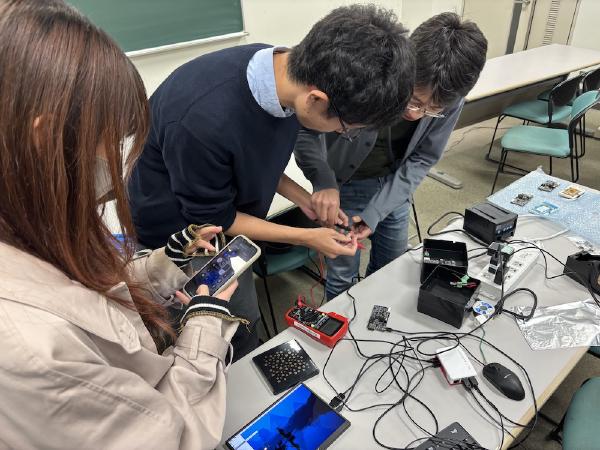
This retreat included a first in-person meeting with the University of Toyama members who joined the project this year, and discussion was lively. On the development side, we redesigned OSECHI’s PCB and worked hands-on through how to combine the electronic parts and configure the initial setup, completing five OSECHI detectors by the end. The retreat further strengthened collaboration among members and marked an important step forward for future development.
From October 28 to 29, 2025, the Scintillator Enhancement Workshop 2025 was held at the Ginga Hall, Faculty of Science and Engineering, Iwate University. The workshop is part of Platform A, a KEK detector development project focused on improving scintillators — the light-emitting materials used to detect cosmic rays and other radiation. As part of the workshop, Seiki Tanida, a graduate student at Kyushu University, gave a talk titled “Development of 3D-printed scintillators for compact cosmic-ray detectors.”
On November 16 and 17, 2024, we held an “OSECHI Development Retreat” at Yamagata University. The OSECHI project normally holds regular meetings online, but about once a year we bring members together in person for a concentrated push on development.
A key goal of this retreat was to have students actually use “haniwers,” OSECHI’s data acquisition software, hands-on. I had been developing this software on my own up to this point, but having multiple people use it together surfaced unexpected bugs and areas for improvement, giving us valuable feedback for future work.
A proceedings titled “墳Q (fun-Q) project: muography of Japanese ancient mounds by high school students” was published in Proceedings of Science (PoS).
The fun-Q project is muography (muon tomography) of Japanese ancient mounds by high school students, carried out through interdisciplinary collaboration. The team consists of high school students and teachers, scientists, engineers, communicators, curators, and archaeologists. The students are divided into groups, working with experts in both archaeological and physics research and combining the results of their studies. The first target was Akiyama Koshinzuka Kofun, located near the students’ school. The team conducted a Ground Penetrating Radar (GPR) survey and cosmic-ray measurement using OSECHI, a Japanese-style cosmic-ray muon detector developed for outreach and education.