Muons produced in bulk by an accelerator power more than just precision measurements — they’re also put to work in applied research. One application drawing particular attention in recent years is using muons to investigate cultural artifacts, and researchers around the world are also, right now, building accelerators purpose-built for muons.
Seeing Inside Cultural Artifacts With Muons #
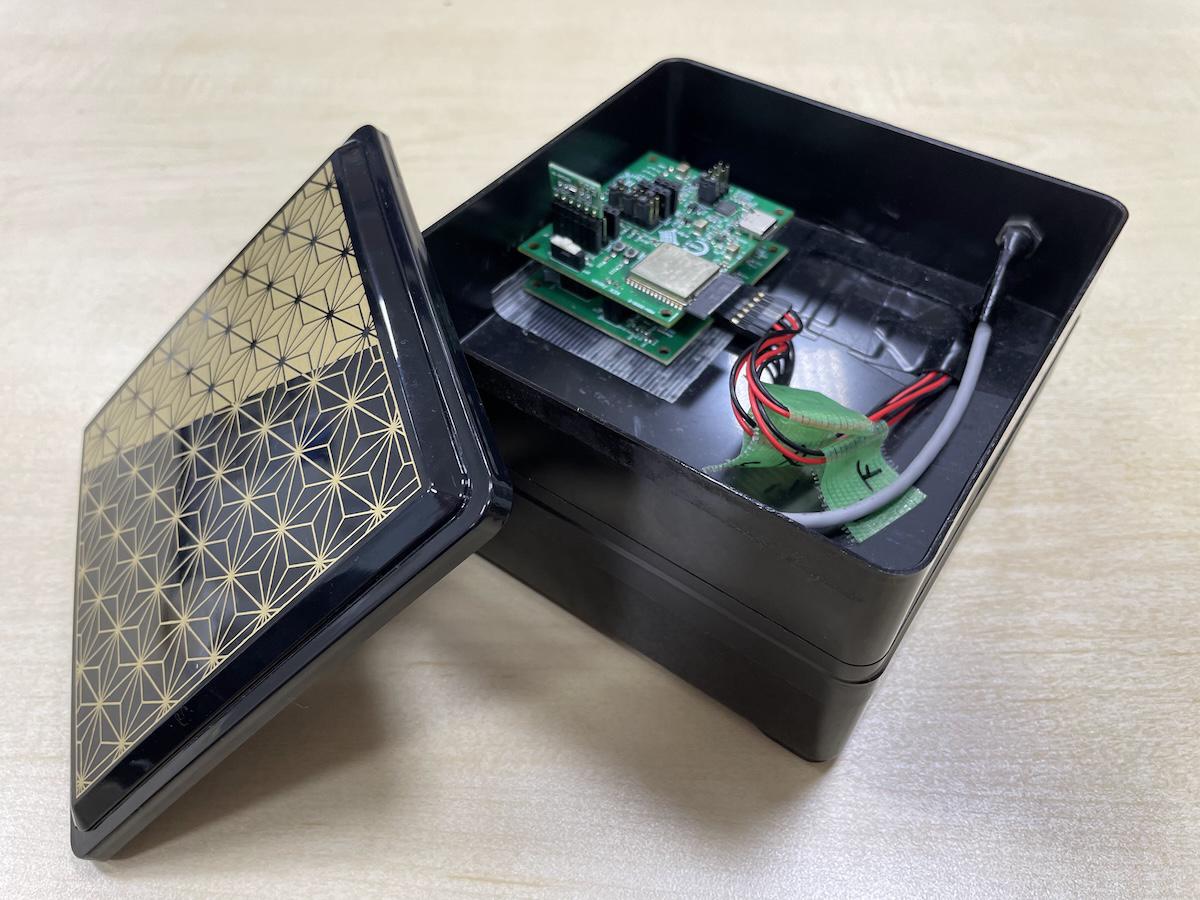
Accelerator-made muons are also put to work in collaboration with archaeology, history, and conservation science — the field devoted to preserving and restoring cultural artifacts. When a negatively charged muon is aimed at an object, it gets captured by an atomic nucleus and, in the process, emits X-rays characteristic of that particular element (muonic X-rays). By measuring these X-rays, researchers can map an object’s elemental distribution deep below the surface, unlike conventional X-ray analysis, which can only probe near the surface, all without cutting into or damaging it in any way.
Muon beams are starting to be used to analyze historical artifacts that are difficult to examine destructively — metal Buddhist statues, swords, objects excavated from archaeological sites. In Japan, a muonic X-ray measurement system for cultural heritage is taking shape at J-PARC, with published analyses of Edo-period archaeological artifacts already among its results. Projects like these are often driven jointly by particle physicists alongside archaeologists, historians, and conservation scientists, making this a growing interdisciplinary field.
Learning to Accelerate a Muon Freely #
Accelerating a muon is a far harder challenge than accelerating an electron or a proton. A muon is far heavier than an electron yet much lighter than a proton, so neither an electron accelerator nor a proton accelerator can simply be reused as-is. On top of that, its average lifetime is only about 2.2 microseconds, adding the constraint that producing, cooling, and accelerating it up to its target energy all have to happen within that fleeting window.
In 2024, a research group at J-PARC announced the world’s first breakthrough on this challenge with a muon linear accelerator built from scratch for the purpose. A reliable, purpose-built accelerator that can produce a high-quality muon beam with well-defined direction and speed doesn’t just sharpen the precision of the search for new physics in the muon — it also gives non-destructive analysis techniques further momentum. Development of accelerators like this one is continuing around the world, with an eye on an even bigger goal: building a muon collider that would collide muons — far heavier than electrons — head-on. Such a machine could reach higher collision energies in a far more compact footprint than existing colliders.
References #
- Otani, M., “First muon acceleration and muon linear accelerator for measuring the muon anomalous magnetic moment and electric dipole moment,” Progress of Theoretical and Experimental Physics 2022, 052C01 (2022). https://doi.org/10.1093/ptep/ptac067
- “World’s First Cooling and Acceleration of Muon — The First Muon Accelerator Finally Coming to a Reality,” J-PARC Press Release (2024). https://j-parc.jp/c/en/press-release/2024/05/23001341.html
- Chiu, I.-H. et al., “Nondestructive 3D elemental imaging of Edo’s archaeological artifacts via muonic X-ray measurements,” npj Heritage Science 13, 154 (2025). https://doi.org/10.1038/s40494-025-01741-8