From August 9 to 10, 2023, the OSECHI group teamed up with Waseda University Honjo Senior High School to carry out a measurement study using OSECHI at Akiyama Koshinzuka Kofun, a horizontal-entry round burial mound in Honjo, Saitama Prefecture.
Akiyama Koshinzuka Kofun is a round burial mound about 34 m in diameter and 5 m high, built in the late 6th century, with a horizontal-entry stone chamber (about 7.7 m long) opening to the south-southwest. It’s one of the mounds making up the Akiyama Kofun cluster, designated a Honjo City historic site and a Saitama Prefecture important site, and its internal structure is already known.
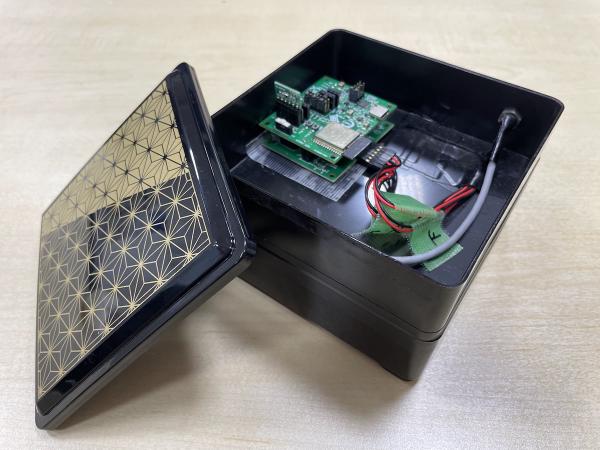
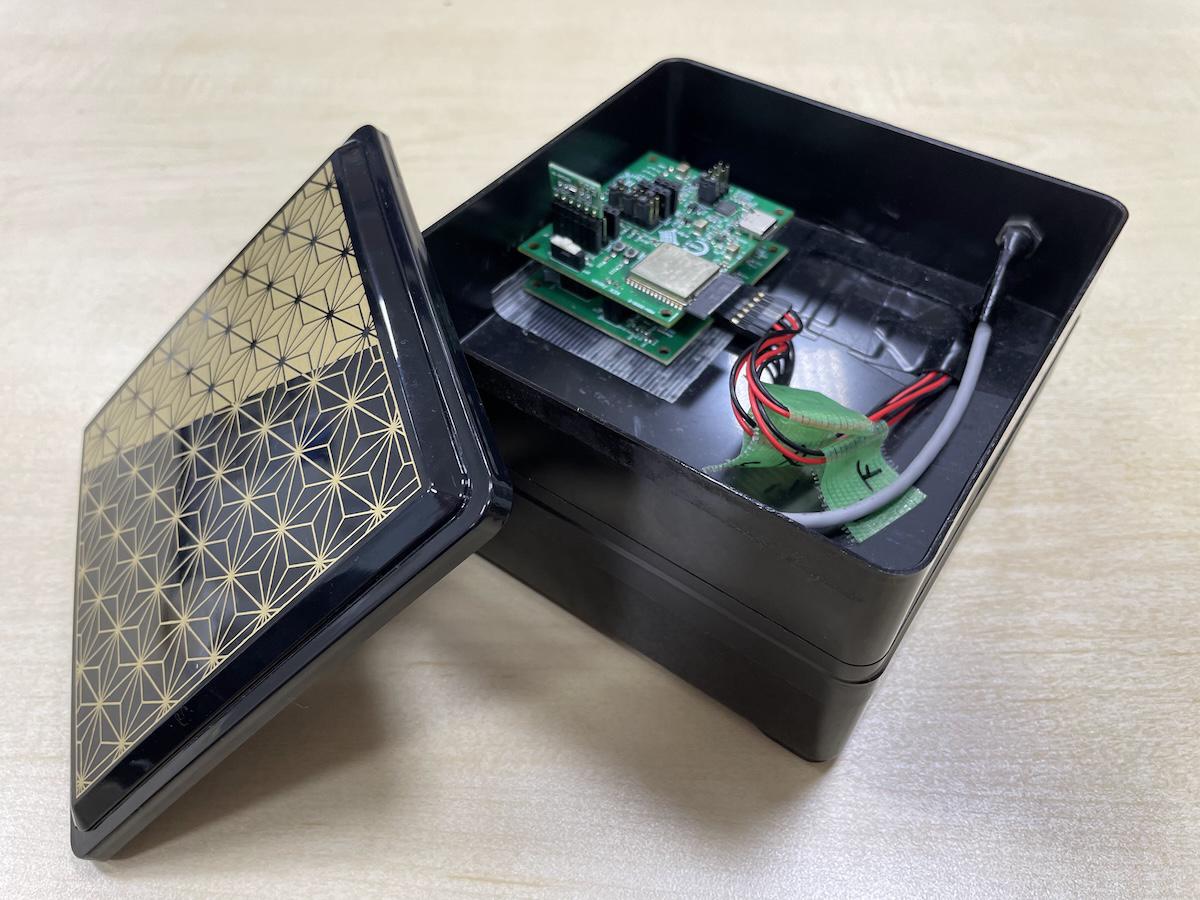
This time, the group made advance arrangements with Honjo City and was allowed to measure inside. We set up OSECHI inside the mound to verify that the equipment would operate correctly. Taking advantage of OSECHI’s portability — a full detector, electronics included, contained in a Japanese-style tiered box — the group took on an overnight measurement inside the unusual environment of the burial mound.
Partway through the measurement, we observed an unexplained increase in the detection rate, which showed that the circuit design and measurement firmware need to be made more stable. From here, we aim to orient OSECHI toward the entrance side and the far (wall) side of the mound to see whether we can capture a difference in detection rate — using muography, a technique that exploits the high penetrating power of muons produced by cosmic rays to non-destructively determine the amount of material in a given direction by measuring their arrival direction and count through a structure.
Members from Waseda University Honjo Senior High School, KEK, Yamagata University, Osaka University, and SOKENDAI gathered for the measurement, with students from Waseda University Honjo observing on site.