When a primary cosmic ray enters the atmosphere, the single particle branches out again and again, producing a swarm of countless secondary particles. This phenomenon is called an air shower. By the time it reaches the ground, the shower has become a group of particles arriving simultaneously across a wide area.
How a Shower Spreads #
When a primary cosmic ray collides with a nucleus in the upper atmosphere, it produces secondary particles such as pions. These particles go on to react with other nuclei or decay, multiplying the particle count in a cascading chain reaction.
The resulting particles travel roughly along the direction of the original primary cosmic ray as they spread out toward the ground. As a result, at ground level, large numbers of muons and other particles arrive almost simultaneously over an area ranging from tens or hundreds of meters — or, for the largest showers, several kilometers — across.
Shower Size and Energy #
The higher the energy of the original primary cosmic ray, the more secondary particles are produced and the wider the shower spreads. Showers from extremely high-energy cosmic rays can spread particles across several kilometers by the time they reach the ground.
Observing from Multiple Sites #
A single detector can only catch a fraction of the muons passing through a shower. But by placing multiple detectors at separate locations and looking for events that occur at nearly the same instant, you can link together multiple hits that trace back to the same air shower.
Spacing detectors farther apart increases the chance of catching larger, higher-energy showers. Placing them closer together instead lets you study the particle distribution within a single shower in more detail.
Working Toward Air Shower Observation with OSECHI #
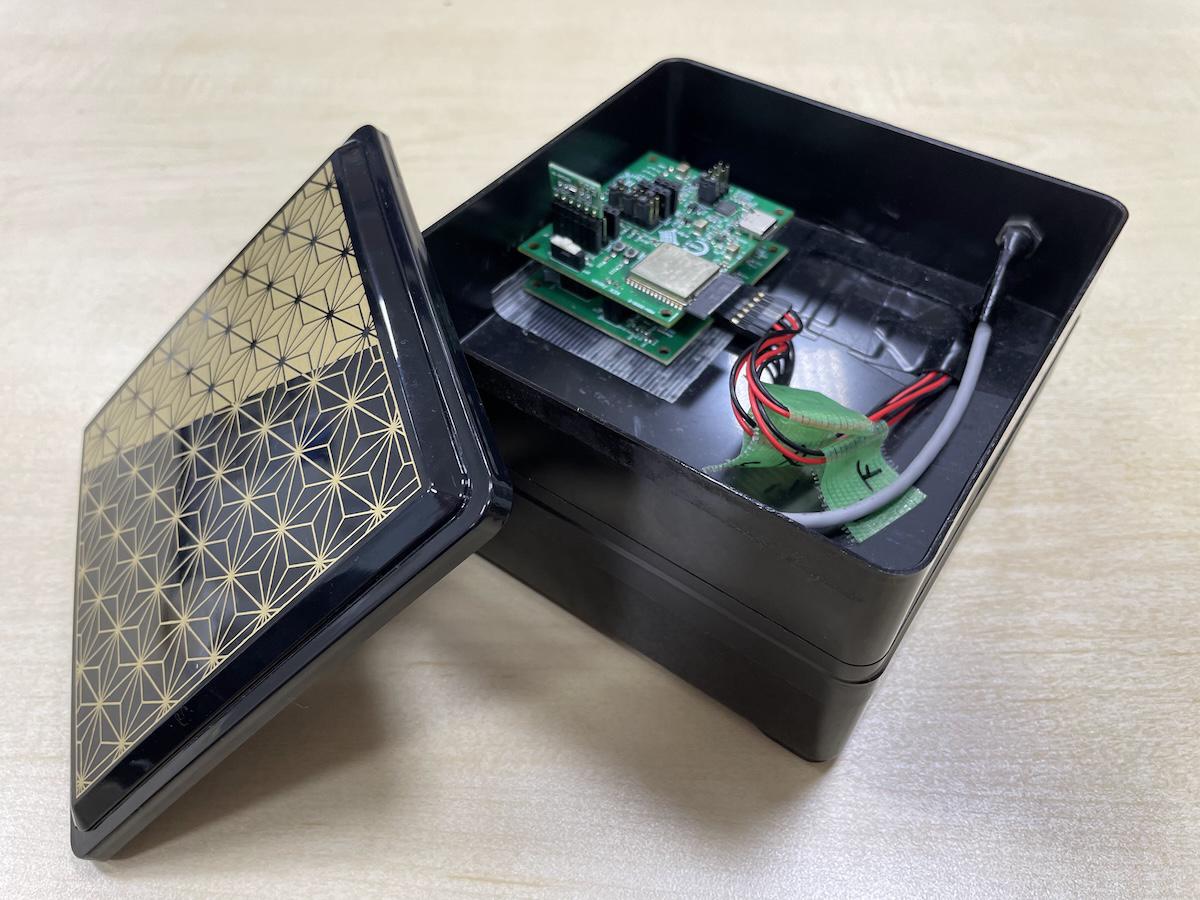
A single OSECHI unit can already record muon events through coincidence measurement. Building on that to run multiple units simultaneously at separate locations, searching for air-shower events, is a measurement we’re still working to realize.
If many OSECHI units deployed across a wide area could collect data at the same time, it would become a citizen-science effort to observe large-scale cosmic ray showers. Making that observation a reality together with participants is one of the goals OSECHI is aiming for.