Muography uses the high penetrating power of muons to image the internal structure of large objects. Just as X-rays image the human body, muography “sees through” buildings, volcanoes, and pyramids.
How Muography Works #
As cosmic-ray muons pass through matter, they travel in a straight line while gradually losing energy. Denser material absorbs more muons, so the number of muons observed on the far side of an object varies with the density of the material along the path they traveled.
By measuring the number of muons arriving from many directions and comparing how much each is attenuated, it’s possible to image the internal density distribution — much like an X-ray. Unlike X-rays, which can only penetrate a few centimeters of matter, muons can pass through tens to hundreds of meters of rock, making it possible to image the interior of mountains and massive structures.
Applications #
Volcano and Ground Imaging #
Muography can non-destructively reveal how magma is distributed inside a volcano from the outside. In Japan, observations have been conducted at volcanoes such as Sakurajima and Mt. Aso. Real-time monitoring of magma movement holds promise for eruption prediction.
Imaging Large Structures #
The discovery of an unknown cavity inside the Great Pyramid of Giza made global headlines in 2017. Because muons can penetrate tens of meters of stone, they can reveal the internal structure of massive stone structures. Muography is also used in nuclear decommissioning to locate fuel debris inside reactors.
Security and Resource Exploration #
Muography is applied to detection of nuclear materials and smuggled goods at ports and borders. It is also effective for surveying underground resources (ore deposits, cavities) as a non-destructive, non-invasive investigation method.
Working Toward Muography with OSECHI #
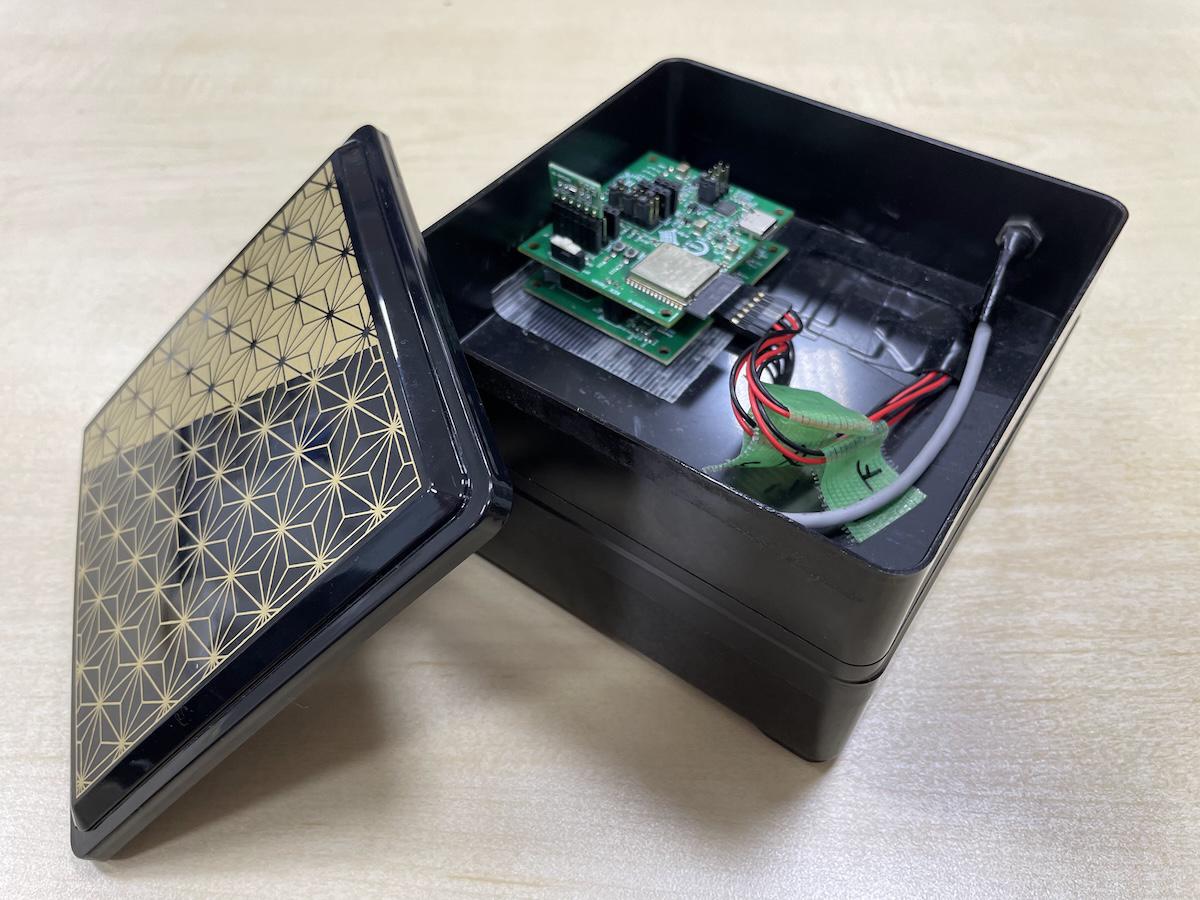
Muography requires a detector that measures muons from multiple directions over an extended period. Deploying multiple OSECHI-style compact detectors over a long period should make it possible to experience the principle of muography using familiar buildings and terrain.
This measurement hasn’t been realized yet, but working toward it together with participants is one of the goals the OSECHI project has in view.
References #
- Morishima, K. et al., “Discovery of a big void in Khufu’s Pyramid by observation of cosmic-ray muons,” Nature (2017). arXiv:1711.01576
- Oláh, L., Tanaka, H. K. M., Ohminato, T. & Varga, D., “High-definition and low-noise muography of the Sakurajima volcano with gaseous tracking detectors,” Scientific Reports (2018). Open access (PMC)