Cosmic rays have been studied for over a century since their discovery in 1912, yet some fundamental questions remain unanswered. Here are a few of the open problems researchers around the world are still working on.
Where Do the Highest-Energy Cosmic Rays Come From? #
Observations have confirmed that, on rare occasions, cosmic rays reach Earth carrying an almost unbelievable amount of energy for a single particle — these are called ultra-high-energy cosmic rays. The highest energies ever recorded far exceed what humanity’s largest particle accelerator, the LHC, can produce.
Few astronomical objects could impart that much energy to a particle; supernova remnants and active galactic nuclei (AGN) are candidates, but which objects actually produce ultra-high-energy cosmic rays is still unidentified. Because these events are extremely rare, solving the mystery requires long-term observation with a vast network of detectors — a major obstacle to gathering enough data.
A recent example came in 2021, when the Telescope Array experiment in Utah, USA, observed a cosmic ray with an almost unimaginable energy of 244 exa-electronvolts. The discovery, announced in 2023 by a team that included Japanese researchers, was named the “Amaterasu particle” after the sun goddess of Japanese mythology. The second-highest-energy particle ever recorded, its source has still not been identified — a concrete example of this open question.
The GZK Limit Puzzle #
In theory, ultra-high-energy cosmic rays should lose energy as they travel through space by colliding with the cosmic microwave background (the afterglow of the Big Bang), meaning they shouldn’t be able to reach us from extremely distant sources. This predicted cutoff is known as the GZK limit.
Most observed cosmic rays are broadly consistent with this prediction, but some reported events — including the Amaterasu particle — appear to exceed the GZK limit, and the debate continues. Gathering more data and improving measurement precision are seen as key to resolving this puzzle.
The Mystery of Cosmic Ray Composition #
The mix of particles that make up cosmic rays — protons, helium nuclei, heavier nuclei, and so on — is known to shift with energy. This shifting composition offers clues about what kind of astronomical object accelerated the particles and how, but the limits of current observation technology mean it hasn’t yet been pinned down precisely.
OSECHI and the Future of Cosmic Ray Research #
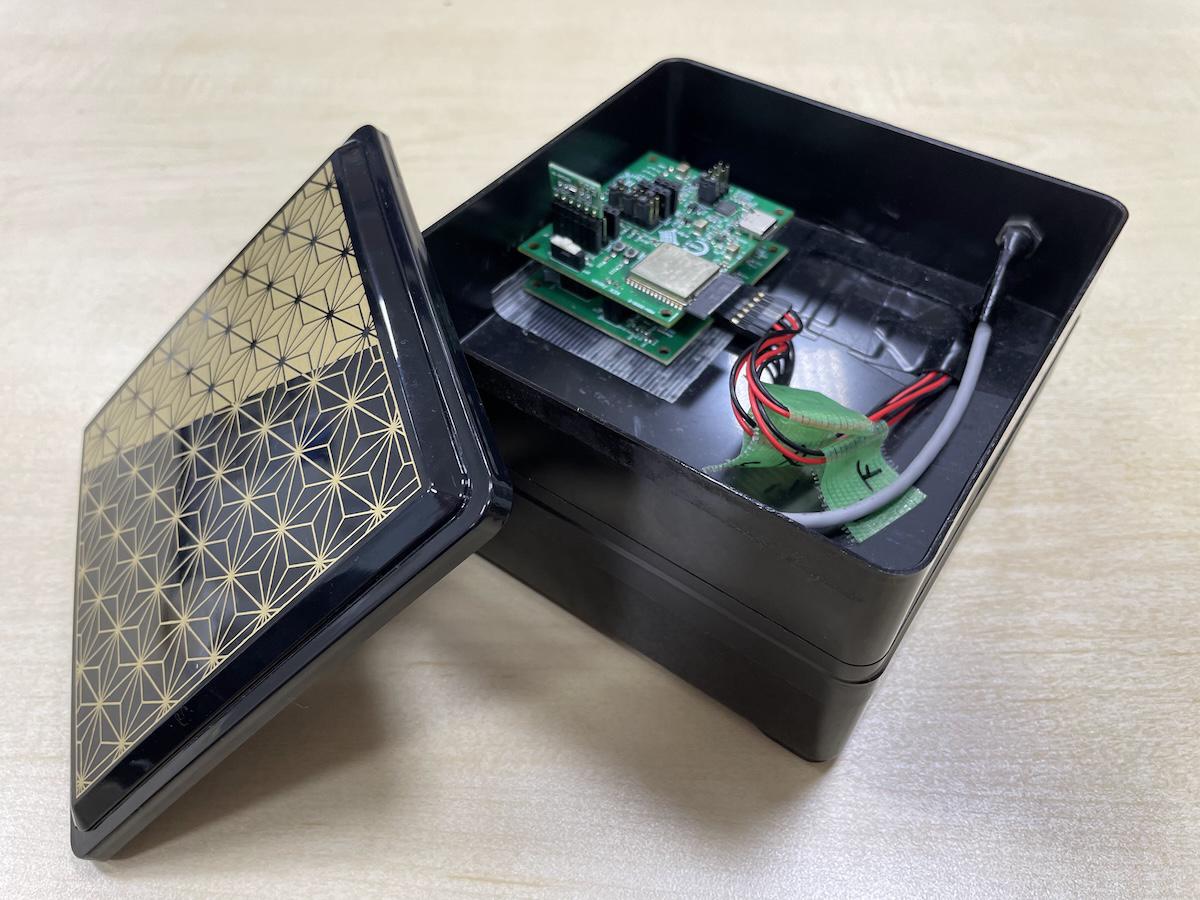
Many of these open questions concern ultra-high-energy cosmic rays, an extremely rare phenomenon that requires long-term observation by detector networks spread across the globe. Citizen science built on small detectors like OSECHI won’t solve these mysteries directly, but it broadens understanding of cosmic ray observation itself, and can help build the foundation that future research stands on.
References #
- Telescope Array Collaboration, “An extremely energetic cosmic ray observed by a surface detector array,” Science (2023). arXiv:2311.14231